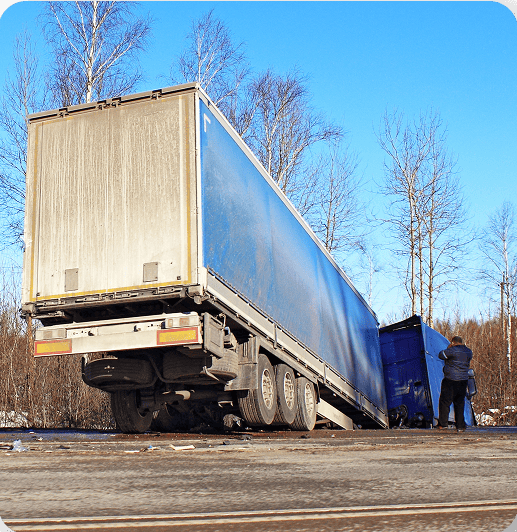
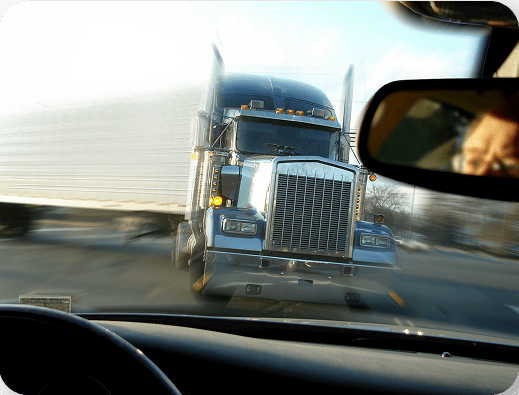
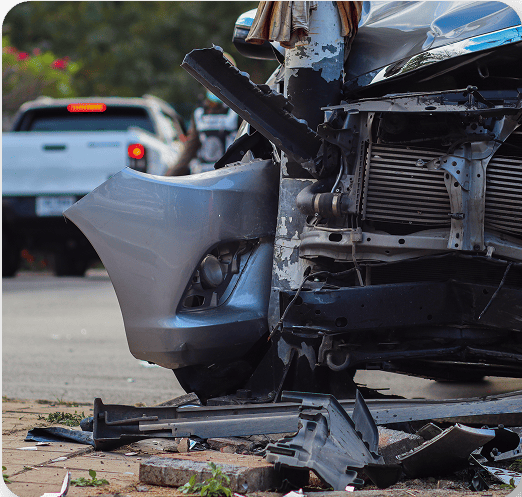
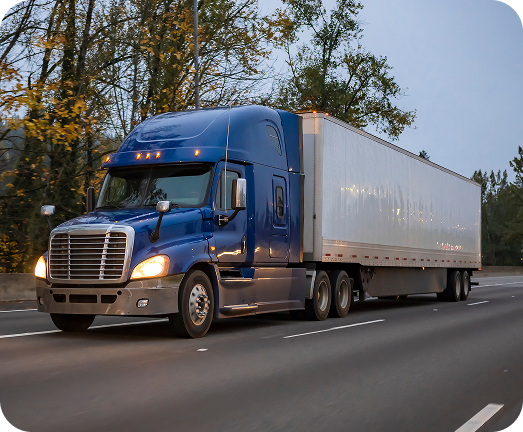
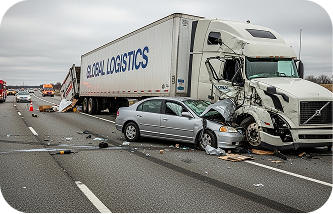
A collision with a semi-truck is one of the most dangerous crashes a driver can face. Trucks often weigh 20 to 30 times as much as a passenger car, and when the two collide, the people in the smaller vehicle almost always take the worst of it. In 2023, most of the people killed in large truck crashes nationwide were riding in cars and other passenger vehicles. At Grabb & Durando, our Tucson truck accident lawyers take on trucking companies and their insurers so injured people and their families can recover what they've lost.
Why Semi-Truck
Accidents Happen
Most truck crashes come down to decisions made by the driver or the trucking company. Tight delivery schedules can push drivers to speed or skip rest breaks, and fatigue is a real risk in an industry where federal rules allow up to 11 hours of driving at a stretch. A loaded tractor-trailer also needs 20 to 40 percent more distance to stop than a car, so following too closely or driving too fast for conditions leaves almost no room for error.
Some of the most common reasons for semi-truck
accidents include:
- Driving while tired or drowsy
- Driving in an aggressive manner
- Driving at excessive speeds
- Disregarding weather conditions
- Driving with a truck that has been overloaded
- Driving a truck that has not had the proper maintenance
- Driving under the influence of drugs or alcohol
Tucson sits on two of Arizona's busiest freight routes. Interstate 10 carries a steady stream of long-haul trucks through the city, and I-19 brings heavy commercial traffic north from the Nogales port of entry. Crashes on these corridors often involve out-of-state carriers, which can make it more complicated to sort out who's responsible and which insurance applies.
Why Evidence Matters in a Truck Accident Case
Trucking companies often send investigators to a crash scene within hours to protect their driver and their business. Critical evidence can be moved, repaired, or lost in that time, which is why it's so important to have someone working on your side right away.
Most commercial trucks now record the driver's hours electronically, and the truck's onboard computer can capture its speed, braking, and other data in the moments before a crash. That information can show whether a driver was over their legal hours or driving too fast, but it can be overwritten or discarded if no one asks for it to be preserved. In a semi-truck crash case, one of our first steps is often a formal demand that the trucking company keep every record.
Driver fatigue is one of the most common problems these records reveal. When drivers push past federal hours-of-service limits to meet a deadline, and companies look the other way, everyone on the road is put at risk.
Who Can Be Held Responsible for a Truck Accident?
Unlike most car accidents, a truck crash can involve several responsible parties, and each may carry its own insurance. Depending on what caused the crash, a claim may be brought against:
- The truck driver, for speeding, distraction, fatigue, or impaired driving
- The trucking company, for unsafe schedules, poor hiring and training, or ignoring safety rules
- The company that loaded the cargo, if an overloaded or unsecured load contributed to the crash
- A maintenance contractor, for faulty brake, tire, or equipment repairs
- The manufacturer of a defective truck part, such as brakes or tires
Identifying every responsible party matters because it can open up more insurance coverage, which is often the difference between a settlement that covers your losses and one that falls short.